


Every year, another catalogue lands on a coach's desk.
Two hundred drills. Colour-coded by age group. Laminated, if you're lucky. Sport-specific "content" that promises to fix everything from first touch to game intelligence, as long as you run it exactly as written.
And every year, coaches do the same thing with it: they flick through, find three they like, run them on repeat, and quietly wonder why the players still can't solve the problem in the game on Saturday.
Here's the uncomfortable truth. The drill was never the problem. The coach's toolkit was.
Content Is Not the Same as Connection
Organisations love content. Content is easy to sell. It's a PDF, a session plan, a video library, something you can point to and say "look how much we've given you." It photographs well in a marketing pack.
But content doesn't coach anyone. A player doesn't get better because a drill exists. They get better because someone in the moment noticed something, asked the right question, or paused the game at exactly the right second to make them see it for themselves.
That's connection. And connection isn't something you can hand a coach in a folder. It's a set of teaching skills: reading the game in front of you, deciding when to speak and when to shut up, knowing which lever to pull to make the next rep matter more than the last one.
Sport-specific knowledge tells a coach what good looks like. Teaching skill is what actually gets a player there.

The Coach With Drills vs The Coach With Skills
Picture two coaches, same session plan, same players, same afternoon.
The coach with drills plans the session and hopes it fits the players in front of them. They run the activity to the end regardless of what's happening inside it. When the game changes, and the game always changes, they run out of road, because the plan was the point. Success gets measured by whether the session ran smoothly.
The coach with skills reads the players and adapts the game as it's unfolding. They pause it, replay it, or redesign it the moment it stops teaching. They always have another tool to reach for, because they were never relying on just the one. Success gets measured by what the players noticed and solved, not by how tidy the session looked from the sideline.
Same drill. Completely different outcome. The difference was never in the activity.
Why This Matters More Than the Drill Library

Clubs and schools keep investing in sport-specific knowledge (tactics boards, technical breakdowns, periodisation charts) because it's tangible and it's easy to badge as development. But knowledge without the teaching skill to deliver it just sits on a shelf.
Give a coach ten more drills and you've given them ten more things to run. Give a coach the ability to notice, question, and adapt in real time, and you've given them something that works whichever ten drills they happen to be running that day.
The best sessions were never the ones with the best activity. They're the ones where the coach reached for the right tool at the right moment.
The Box
Here's what actually does the work, session after session, whatever sport you coach:
- Pause. When do you freeze it, how do you freeze it, and who's allowed to call it? A pause used well creates a moment of real thinking. A pause used badly just interrupts the flow for the sake of it.
- Replay. Which moment is worth running again, so a player gets the chance to try a different answer? Not every mistake needs fixing on the spot. Some need a second go instead.
- Levels. How do players move up and down the challenge in front of them? A skill only gets tested properly when the level of difficulty is actually matched to the player attempting it.
- Scoring systems. Can you create the need for a skill just by rewarding it? Change what earns points and you change what players choose to do, without ever telling them to do it.
- Problem setter. Can the game itself ask the question, instead of you giving the answer? The best coaching moments often involve saying nothing at all.
- Freeze. Engage the player on the ball, the players around it, and the players away from it. A freeze that only talks to the player on the ball wastes the other nine.
- 2nd ball. Bonus points and second balls shift behaviour instantly. Think carefully about who gets the ball back, and why, because that decision teaches as much as anything you say.
- Time. Without it, it isn't really a game. Time pressure is one of the cheapest, most effective tools in the box, and one of the most underused.
- Noticing. What did you actually see, and what will you change because of it? This is the tool that makes every other tool work. Without noticing, you're just running your favourite ones on autopilot.
- Designer. Pitch shape, size, and number of players. The smallest tweak here often creates the biggest shift in behaviour, with zero extra coaching required.
None of these are activities you can print and laminate. They're decisions. And a coach who's genuinely fluent in all ten can take a single, fairly average drill and turn it into ten completely different lessons, just by changing which tool they reach for.
Stop Asking the Wrong Question
Stop asking "what drill should I run next." Start asking "which tool does this moment actually need."
That single shift changes everything about how a session gets delivered. It means a coach never runs out of options, because the options were never tied to a specific activity to begin with. It means a mediocre drill in the hands of a skilled coach beats a brilliant drill in the hands of one who's just running it to the end.

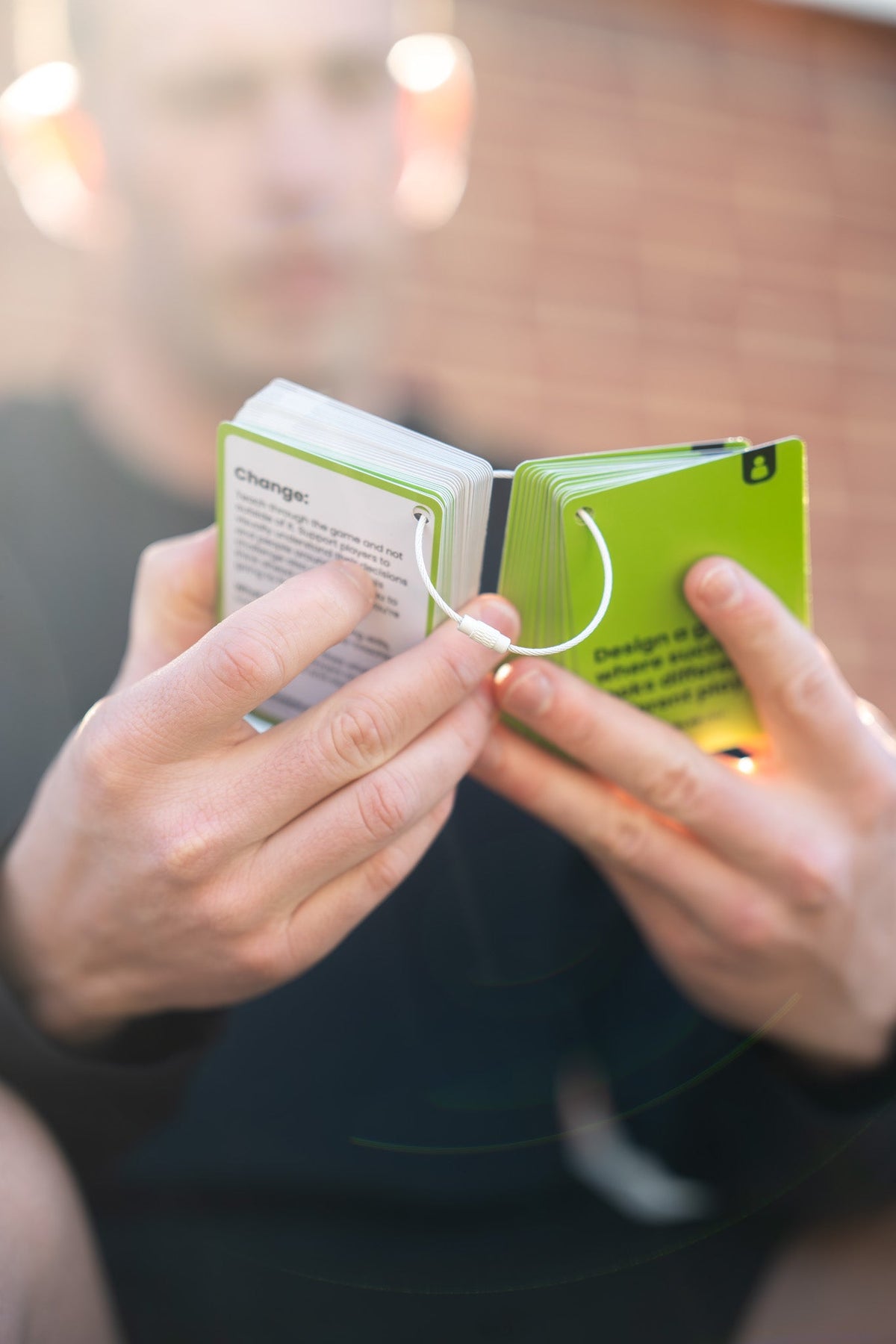
This is exactly the gap our Coach Challenge inside MatchPlay Cards was built to close. Instead of handing coaches another activity to plan around, each card puts one of these live, in-the-moment decisions directly into their hands: a question to ask, a constraint to add, a scoring twist to introduce. Real judgement, practised inside the game, not read about beforehand.
Ten tools. One coach. That's where real development starts.

Share:
Stop Managing Behaviour. Start Designing Better Training Environments.